Showing posts with label philosophy of science. Show all posts

Saturday, December 19, 2015

Science as Divine Revelation


The last few nights I have been re-watching the Jeffrey L. Kasser lectures on the Philosophy of Science.  These lectures could be the foundation of a new type of learning if people recognize its importance.  The conclusion of this series of lectures is that we have no good way of defining science; neither do we have any good way of defining anything as un-scientific, or even pseudo-science.  Point by point Kasser dissects every attempt through the ages to define science, and we come up empty.  The biggest bogey is Astrology.  Can we reject Astrology as pseudo-science?  It is not clear how to do this.   Can we say that it cannot make accurate predictions?  No, because medical science often cannot make accurate predictions, and neither can climate models.  Some times the predictions are inaccurate.  In fact, often, in some cases, the predictions are wrong, as in Psychology.  Can we deny the scientific status of medical science, climatologists, and Psychologists?  No, but using this methodology, neither can we deny Astrology.  Another proposal is that science always makes progress, and we can call Astrology pseudo-science because it has not made any progress in centuries.  On the contrary, chemistry has not made any significant progress in over 100 years, but it is a solid, indisputable science - without question.  Another argument is that science always has repeatable results.  Many hard core experimenters fall into this trap.  However, this is false.  Again, medical science is not always repeatable, and neither is climate science, or Psychology.  Our cures for cancer in many cases have no clear repeatable results.  Nobody can predict hurricanes.


We can go on and on forever, finding criteria for defining science versus pseudo-science, but in all cases, the criteria are failures.  The criteria become too strong for some cases, and too weak for other cases.  


Another interesting subject within the sciences is the establishment of Causation.  Typically, we collect data in numerical form about one thing, and compare it to the data for another thing.  How do we say one thing causes another thing?  The strange answer: there is no method to establish causation.  We all establish cause by saying, “I know it when I see it.”  When I was in college studying circuits and signals, one method used to establish practical causation was superposition.  When I changed the input and had a proportional change in the output, I can infer that the input causes that particular output.  However, this is a pragmatic rule of thumb in engineering, and not a scientific principle that establishes that something caused another thing.  


So, if we have a few rules of thumb in both science and engineering used to establish things as true, can we claim Scientific Privilege?  Science is supposed to be special.  We have solid rules of thumb in construction, and within the trades to establish methods to accomplish things and determine facts.  Is science just another trade like plumbing and welding?  Well, the more we look into what goes on within science, the more it appears that it is no different in principle from welding and building construction.  

There is a lot of support for the idea that pragmatic men working on problems in business or in the trades discover principles that are later integrated into science.  Issac Newton, the greatest genius of the ages, took the practical work of Kepler and others and integrated this into a whole in the most magnificent scientific theory of the ages: Newton's Laws of Motion.  Einstein did the same thing when he investigated the data from previous decades, and made the magnificent observation that everyone misinterpreted the data because they assumed that physical objects and time were constant instead of assuming that light was constant and everything else changed.

Many advances in science appear to be accidents that a genius recognized, synthesized, and then introduced to the world.  


True advances in science have nothing to do with methods.  They use the same methods plumbers and construction workers use.  What makes science magic is the geniuses that have vision, and receive a revelation from God, and then it all comes together in an instant at one point in time - as all revelations do.  Teasing out a revelation is what takes time and effort - writing the book, etc.  But, science, at root, is Divine Revelation.

Tuesday, February 10, 2015

Random Notes 20150210

Tuesday, February 10, 2015


Community Coffee

Growing up in Louisiana, I grew up drinking Community Coffee.  Eventually I got sick of it from over use.  But, I drink it occasionally now that I live far away and cannot purchase the stuff in local stores.  Perhaps once every two weeks I may drink 2 cups of the stuff.  I have the Dark Roast Select, which is a little better than the regular stuff.  

Coffee is the social Sacramental Drink par excellence.  You cannot just pour the stuff from a bottle like soda drinks or bottled water.  You must go through several procedures to make it.  And, like tea, it is good for the essence of social life: conversation.  Gather around a cup of coffee and have communion with conversation.  Take this, all of you and drink it for this is my coffee, made for you. 

Tony Robbins Pareto Principle

The Pareto Principle says that 20% of the causes produce 80% of the effects.  Tony Robbins says that the formula for success is 80% Psychology and 20% Mechanics.  Coming from anybody else, this may sound like another feel good, positive thinking bull crap statement.  But, Tony Robbins has the credibility to back up this assertion as he is one of the richest men in the world.

So, we should focus on managing our mental, emotional and spiritual energies most of the time, and only focus on the mechanics of execution 20% of the time.  A lot of this means to focus on the most important things, and delegate everything else.  Are we “stressing the small stuff”?  Outsource that stuff to India, China or the Philippines.  That is what I do.

The Problem of Induction

I have studied philosophy since 1992 - it has been 23 years.  The Problem of Induction is perhaps, still, the most haunting problem, the most persistent, and still there is no solution in sight.  What is the core of the Problem of Induction?  It is the foundation of the Scientific Method.

Consider the following.

  • I have observed one million swans.
  • All one million swans are white.
  • Therefore, all swans are white.

Or, more scientific:

  • I have observed 1000 pieces of copper.
  • All 1000 pieces of copper conduct electricity.
  • Therefore, all copper conducts electricity.

From the first, do you consider that there are any Black Swans?  

This process, my friends, is the Problem of Induction.  It is the foundation of the Scientific Method.  Yet, it has absolutely no basis in logic or proof.  It is a method that works most of the time, but not all of the time.  

  • Jets crash.  
  • The conclusions of medical studies change every 2 years.  
  • Nobody can predict the stock market.

So, if we are dazzled by the supposed success of our “scientific civilization” we must remember that there is no reason to conclude the truth of any scientific claim - none whatsoever.  

This, when you think about it, is absolutely shocking.

///


Freddy Martini  

Monday, October 20, 2014

Mind-Body Problem


Mind-Body Problem

When you change your story, you change your life.  –Freddy Martini


The Setup

“It is all in your mind.”  “You are just imagining things.”  “You are living in a dream world.”

You have heard it.  You have said it.  And, that, my friends is the danger.

What is Real

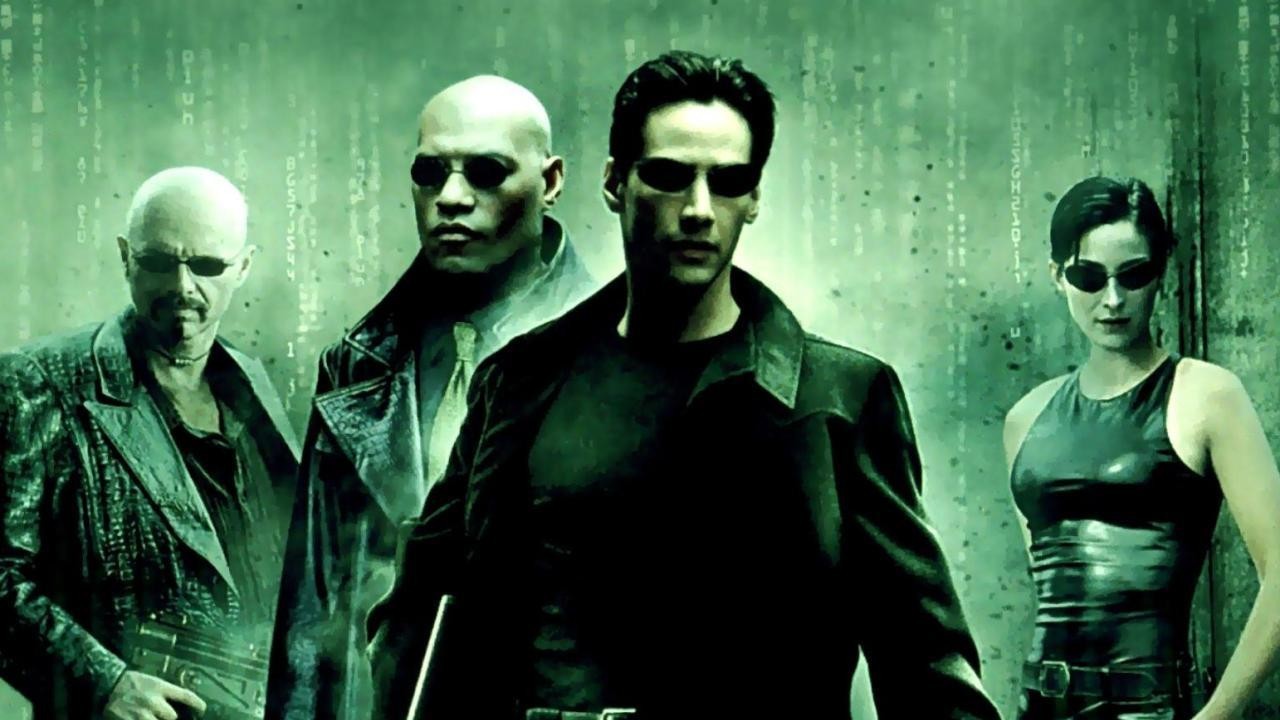
It is not a question, “What is real?” but a statement “What is real.”  Since Descartes came on the scene around 500 years ago, this problem has been with us – Je pense; alors, je suis (I think, therefore I am).  It is the Mind in a Vat.  It is the Ghost in the Machine.  It is The Matrix – yes, the famous movie.  How do I know if I am dreaming right now?  How would I know if I were inside the matrix like Neo, Morpheus and Trinity? 

The Problem

You don’t.  You cannot know whether or not you are in The Matrix. 

How do external physical objects get into the mind?  Perhaps through the sensory organs.  And, this creates other problems such as, how much distortion happens when perception passes through the sensory organs.  How much of this woman I perceive in front of me corresponds to something physically out there?  This leads us to Immanuel Kant, and perhaps even to Berkeley.  Do we verify that what we perceive is actually out there?  Well, anything we perceived as “out there” has to be perceived through something, like an eye or an ear, so, no, we cannot get to the difference between what we perceive in the mind and what is “really” out there.


Do unicorns exist?  We may be tempted to say, “No.”  However, there are two problems with this answer.  The first is the Problem of Induction – observations cannot prove propositions – one discovery of a black swan destroys the proposition that all swans are white.  The other problem is the nature of reality.  If I can conceive something, then I can count it as real.  The unicorn is real – it is in my mind, my mind is real, thoughts are real, and thus, this unicorn is real.

What is the answer to this?  You may say I am using my imagination, and that I have never seen a unicorn in reality.  But – slow down – what is real again?  Are the contents of my mind real?  If the answer is yes, then unicorns really exist.  Now, this sounds bizarre, perhaps to some.  But, let us take this one step further into the Philosophy of Mind.

Numbers and Reality

So, the contents of the mind are real, but we are doubtful that we can say that unicorns are real, right?  I mean, this is just for crazy people right?  Well, read on.

The square root of 2.  √2  What is this?  It is a mathematical concept.  I find a number and multiply it times itself and get the number 2.  The square root of 2.  Simple mathematics.  If you are still with me, let us now go one step further.  Is this number real?  Not many would deny the reality of the square root of 2.  However, where does this number exist?  Is this number out there in external reality outside of our minds?  Think carefully about this.  The answer is “no.”  Nobody can point with their finger to something out there in reality called the square root of 2. 

If you are still with me, we have established that there is this real thing called the square root of 2, and it does not exist as a physical object.  It is a mathematical concept – it is a relational concept.  It is just a concept.  It is not an object.  It is not physical.  You cannot perform an experiment to determine the physical characteristics of the square root of two. 

And, if you are still following, we can go one more step into the abyss and declare the same thing about all numbers.  How does this work?  Well, point to me in physical space the number 127.  Nobody can.  Point to me in physical space where I can find the number 5.  You cannot.  Numbers are not physical existents.  Here is the shocking take-away:


Numbers exist only in the Mind 

If you have trouble wrapping your head around this, a little trick to bring you back to the idea is as follows.  Always remember to think about the square root of 2 and try to point to it in the physical world.  That will bring you back to clear thinking about the concept of physical existents versus existents that can only be in the mind.  Try to get this clear in your mind before going further.  When you have this clear in your mind, you are ready to dance on the edge of the abyss!


The Mind Body Problem

If we have no way of connecting something as simple and real as numbers to physical reality, then how do we say that unicorns do not exist?  How can we say that dreams are not real?  How can we separate fantasy from reality?  You have now jumped into the abyss and are now dancing with me in the abyss.  Come join the party.  It is fun down here!  Okay, let us get back to the discussion.

What is it like to see the color red?  Can you perform experiments to determine how I see the color red?  Can you hook up wires to my head and observe how I see red?  Can you hook up wires to my head and observe how I experience a cool fresh glass of pure pristine water?  Can these wires and this equipment determine how this woman sitting at the edge of the bar experiences that elegant taste of Martini in her glass?

No.  Absolutely not.  You cannot get to the interiority of the mind except your own. 

But this interiority - this experience of ours - is absolutely real.  It is often more real than external physical reality.  People with depression can testify to this.

The Problem of Science

Modern science focuses on the Objective – an object external to the subject.  Modern science cannot get to my experience – the Subjective.  However, the Subjective is perhaps even more real than the objects science measures!  When people dismiss things as purely Subjective, they are making a critical and perhaps fatal mistake: the mistake of blindness.  One cannot know the various hues, themes and variations of reality by excluding “Subjective” reality.  The Philosophy of Existentialism has a lot to say about the Subject.

What does science say about the Subject?  Nothing.  Science deals with objects.  It deals with people as Objects.  It deals with emotions, desire, and love as an object of study.  This is where it is incomplete. 

Here is the core issue of science: Science only deals with half of reality: The Objects.  Science cannot deal with the other half of reality: The Subjective.

With a scientific worldview, you are only getting things half right.  You are blinding yourself to most of reality to fit the methodology of investigating physical objects. 

Here is the shocking truth: In the Mind-Body Dichotomy, Science has chosen to look at the Body, and has closed off all investigations of Mind as illegitimate. 

This is where people make a fatal mistake of dismissing religion, literature and art – the other half of human reality.  And, this other half of human reality is where the Soul resides – the identity of who we are, why we are here, and where we go from here, and why we get up in the morning and choose the hard life of Existentialism instead of the easy life of comfort and ease.

Physical science cannot explain Thomas Edison, Steve Jobs, Napoleon, or Louis XIV, because the Mind – the other half of reality – explains these things, and not physical science.  Where is the equation for Steve Jobs?  What hypothesis can we put forth that produces another Thomas Edison? 

Stories

Humans relate to each other by telling stories.  We pretend to reason with one another and discuss things.  However, in all cases, the things we say must meet a certain expectation.  Think about the English language.  Subject ->Verb –>Object.  Often, western languages are structured for cause and effect relations.  The Subject ->Verb –>Object structure is based upon cause and effect, but also tells a story.  What is cause and effect?  A story.  When I flip a switch and then a light comes on, this is cause and effect, but it is also a story.  When the laws of physics tell us that for every action there is an equal and opposite reaction, it explains cause and effect, but at the same time fitting the narrative of a story.  Even science is a narrative – a story.  We cannot think or communicate outside of narratives and stories.


But stories can be rewritten.  We can write our own stories.  As long as they sound plausible and fit the structure of a story, they work.  The Greek and Roman gods were grand narratives and stories.  The Old and New Testaments are full of stories that have survived the test of time.  These stories are printed on pages, yes, but they only come to life in our minds.  On page, these stories are paper and ink – physical artifacts of no value.  When they enter our minds, they come alive – and give us life in the process.

Your Story

The only thing that matters is what you believe.  You can rewrite a lot of what you are thinking.  Steve Jobs rewrote a lot of our scripts for what we want in interpersonal communications.  You are probably not Steve Jobs, but you can rewrite a lot more of your scripts than you perhaps give yourself credit for.

So, what is your story?  Which stories sustain you?  Which ones give you life? 

Change your narrative – your story – and change your life.

///

Freddy Martini
Thursday, October 9, 2014

Absence of Evidence and Evidence of Absence


Absence of Evidence and Evidence of Absence

Recall the Black Swan


The Problem of Induction is haunting as I intimated here in my review of Jeffery Kasser’s lecture on the problem.  You have probably heard the saying, “There is no evidence to support that,” as if providing proof that the lack of evidence means something.  The converse is the case, “I have tested 1000 pieces of copper and all conduct electricity, therefore all copper conducts electricity.”  This is the problem of induction because when I find one piece of copper that does not conduct electricity, the claim is proven false.  This is also called the Black Swan problem when the rare event – the Black Swan – has not yet been admitted into the evidence locker, as it were, and we conclude that there are no black swans – until someone finds a black swan!

We have probably heard the saying, “Proof is in the positive.”  However, we all know that providing positive evidence proves nothing, because one piece of negative evidence disproves any theory.  The only proofs that we know of are in mathematics and in Deductive Reasoning.  Inductive Reasoning has no methodology of proof.

Lawyers Listen Up!

This provides lawyers with methods to attack any attempt in court to prove guilt.  Since proving guilt involves evidence to a fact, and since evidence is often largely be based upon scientific principles, which all are based on Inductive Reasoning and methods, we can logically attack and destroy any evidence based upon science as invalid.


One legal strategy is to allow the prosecution to have fun and use the testimony and resources of science in argument.  Afterward, the defense can merely use the methods of the Philosophy of Science in attacking the Problem of Induction - and even the Problem of Demarcation for good measure – to systematically destroy any prosecutor who is so foolish to base his arguments upon science.  This is basically setting up the prosecution for an exterminating ambush.  More data means nothing when one piece of evidence can disprove a case and absence of evidence is not evidence of absence.

Such a methodology would be good against planted evidence.  It would bring back the old-fashioned concept of eye-witnesses for proof. 

A More Volatile and Unpredictable World


We live in fantasies that the system will “take care of us” because there are smart people somewhere who have everything figured out with regard to our safety and our care.   The problem with this is that we have been sold a narrative from the priests of modernity – scientists and those with scientific pretensions– who have a vested interest in pretending that they have all the answers and everything is under control.  Nothing can be further from the truth.  The world is filled with Black Swans ready to strike at any moment as Nicholas Taleb has told us in his book of the same name.  Everybody wants security and there are soothsayers out there ready to tell us what we want to hear.

The Storyline


Humans cannot think logically.  So, how do humans think?  I think Ludwig Wittgenstein showed that we all play games called language games and we sit around telling each other stories.  There is the narrative.  The scientific method is essentially a narrative – a particular kind of story we tell each other, pretending it is true.  We gather around the campfire and soothe ourselves with stories with a happy ending – we live happily ever after because we have everything figured out.  The Lord’s Prayer, the Sacraments, the Sacred Liturgy, the Gospel, and the Scientific Method are all Narratives and stories.  Which ones are closer to the truth?  Perhaps those that speak eternal truths to human beings throughout the ages are a little closer to the truth than new methods.  This is not to say that the new methods do not have their uses, but perhaps the stories and the narratives that have withstood the test of time have some sort of Darwinian way of keeping large sectors of humans alive through the centuries and should not be ignored with blind neophilia.

///

Freddy Martini

Wednesday, October 1, 2014

CIA High Priest, Richards Heuer


CIA High Priest, Richards Heuer

The book

He wrote the authoritative book on the subject, “The Psychology of Intelligence Analysis.  You can download the PDF version of the book free from the CIA, here.

My specialty is Engineering Technical Analysis, and I have learned a lot from this book on Intelligence Analysis.  Analysis as a subject can be cross-functional from many areas of study and practice.

The CIA developed several analytical techniques because they make policy recommendations to places like the military and to executives in the government, and even Congress.  These recommendations can have serious consequences – costly consequences if they are wrong.  So, the CIA has a high interest in analytical techniques that are very reliable.  Theories and policies here cost dollars and cents – and lives in many cases.


Just Enough Information (Then stop!)

With the advent of large databases, what are we to do with them?  Actually, nothing.  Information is not important unless it drives a decision.  Driving a decision takes much less information that one would think.  Furthermore, using all information available makes the decision-making process more error prone when the analyst moves past the critical amount of sufficient information.  More data is bad – very bad.

Some people call it Analysis Paralysis.  Too much data will overwhelm your mental faculties and you will begin to make serious errors in judgment, or fail to act completely.

Disprove Everything


If you can recall our discussion on science here, you will know that Karl Popper told us that we cannot prove anything in science; we can only disprove things in science.  Heuer created a straight-forward tool to use this concept in practice call the “Analysis of Competing Hypotheses.”  You can use the tool yourself with a simple piece of paper or a spreadsheet.  See how to do it from the CIA website, here.

The idea is that evidence can support almost an infinite amount of hypotheses, thus, if your theory has “supporting evidence,” so does perhaps 10 others using the same evidence.  What we are doing here is trying to list as many hypotheses that we think are viable, and then we seek to disprove every one of them.  Are you a real scientist?  Are you a fake?  This separates the men from the mice.  Show me how many hypotheses you have disproven in your path to your favorite hypothesis.  What evidence will disprove your hypothesis?  If this is not stated clearly, you are a fake, or at the least, you do shoddy, inferior work.

Implications for Science

We are told that the Scientific Method is what scientists use.  However, a core piece of the puzzle is evidence that will disprove a hypothesis.  Every “scientific” endeavor must define what evidence will disprove the theories.

Next time you hear someone talking about “science,” ask them to clearly define what evidence will disprove their theories.  There is no excuse, since Heuer has clearly defined the procedure and made it easy for all of us to do with his magisterial Analysis of Competing Hypotheses.

Get the book and use the techniques.

///

Freddy Martini

How "Friends" Functions as a Cultural Eugenics (Dysgenics!) Machine

  How "Friends" Functions as a Cultural Eugenics (Dysgenics!) Machine Introduction Friends  (1994–2004) is one of the most influen...

Popular Posts