Mind-Body
Problem
When you change your story, you change your
life. –Freddy Martini

The Setup
“It
is all in your mind.” “You are just
imagining things.” “You are living in a
dream world.”
You
have heard it. You have said it. And, that,
my friends is the danger.
What is Real
It
is not a question, “What is real?” but a statement “What is real.” Since Descartes came on the scene around 500
years ago, this problem has been with us – Je
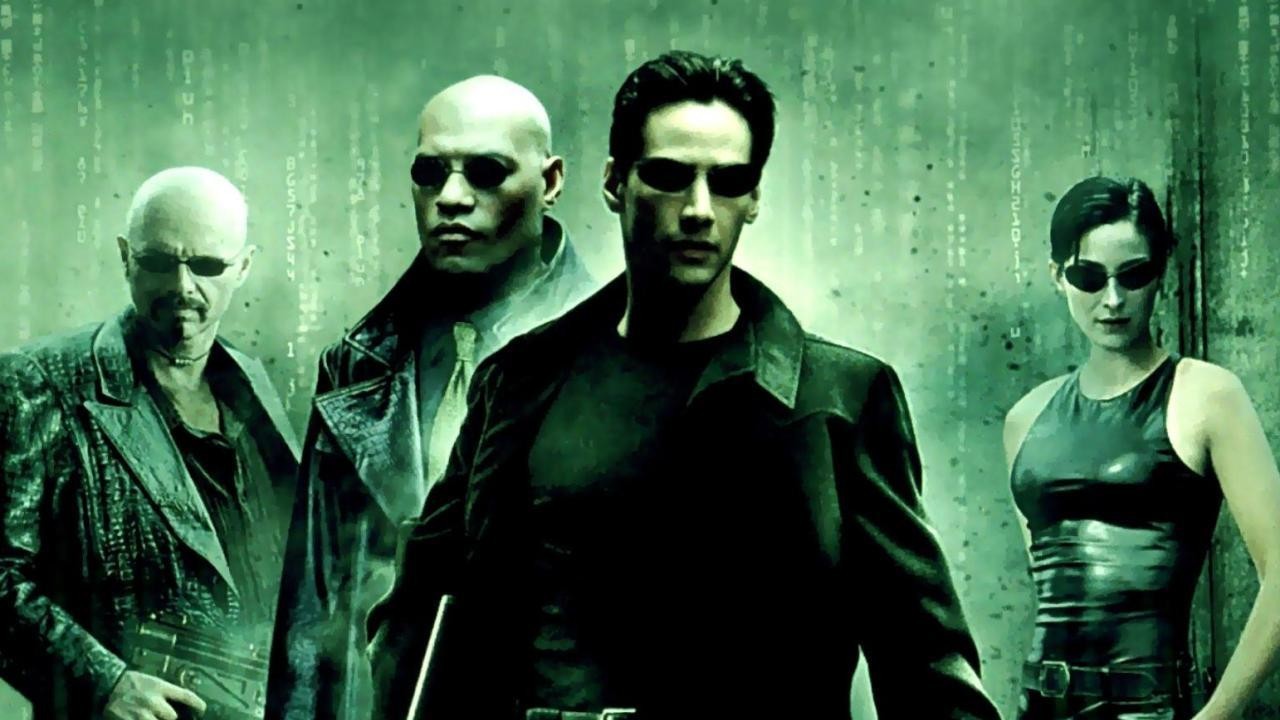
pense; alors, je suis (I think, therefore I am). It is the Mind in a Vat. It is the Ghost in the Machine. It is The Matrix – yes, the famous
movie. How do I know if I am dreaming
right now? How would I know if I were
inside the matrix like Neo, Morpheus and Trinity?
The Problem
You
don’t. You cannot know whether or not
you are in The Matrix.
How
do external physical objects get into the mind?
Perhaps through the sensory organs.
And, this creates other problems such as, how much distortion happens
when perception passes through the sensory organs. How much of this woman I perceive in front of
me corresponds to something physically out there? This leads us to Immanuel Kant, and perhaps
even to Berkeley. Do we verify that what
we perceive is actually out there? Well,
anything we perceived as “out there” has to be perceived through something,
like an eye or an ear, so, no, we cannot get to the difference between what we
perceive in the mind and what is “really” out there.
Do
unicorns exist? We may be tempted to
say, “No.” However, there are two
problems with this answer. The first is
the Problem of Induction – observations cannot prove propositions – one
discovery of a black swan destroys the proposition that all swans are white. The other problem is the nature of reality. If I can conceive something, then I can count
it as real. The unicorn is real – it is
in my mind, my mind is real, thoughts are real, and thus, this unicorn is real.
What
is the answer to this? You may say I am
using my imagination, and that I have never seen a unicorn in reality. But – slow down
– what is real again? Are the contents
of my mind real? If the answer is yes,
then unicorns really exist. Now, this
sounds bizarre, perhaps to some. But,
let us take this one step further into the Philosophy of Mind.
Numbers and Reality
So,
the contents of the mind are real, but we are doubtful that we can say that
unicorns are real, right? I mean, this
is just for crazy people right? Well,
read on.
The
square root of 2. √2 What is this?
It is a mathematical concept. I
find a number and multiply it times itself and get the number 2. The square root of 2. Simple mathematics. If you are still with me, let us now go one
step further. Is this number real? Not many would deny the reality of the square
root of 2. However, where does this
number exist? Is this number out there
in external reality outside of our minds?
Think carefully about this. The
answer is “no.” Nobody can point with
their finger to something out there in reality called the square root of 2.
If
you are still with me, we have established that there is this real thing called
the square root of 2, and it does not exist as a physical object. It is a mathematical concept – it is a
relational concept. It is just a
concept. It is not an object. It is not physical. You cannot perform an experiment to determine
the physical characteristics of the square root of two.
And,
if you are still following, we can go one
more step into the abyss and declare the same thing about all numbers. How does this work? Well, point to me in physical space the
number 127. Nobody can. Point to me in physical space where I can
find the number 5. You cannot. Numbers are not physical existents. Here is the shocking take-away:

Numbers exist only in the Mind
If
you have trouble wrapping your head around this, a little trick to bring you
back to the idea is as follows. Always remember to think about the square
root of 2 and try to point to it in the physical world. That will bring you back to clear thinking
about the concept of physical existents versus existents that can only be in
the mind. Try to get this clear in your
mind before going further. When you have
this clear in your mind, you are ready to dance on the edge of the abyss!

The Mind Body Problem
If
we have no way of connecting something as simple and real as numbers to
physical reality, then how do we say that unicorns do not exist? How can we say that dreams are not real? How can we separate fantasy from
reality? You have now jumped into the
abyss and are now dancing with me in the abyss.
Come join the party. It is fun
down here! Okay, let us get back to the
discussion.
What
is it like to see the color red? Can you
perform experiments to determine how I see the color red? Can you hook up wires to my head and observe
how I see red? Can you hook up wires to
my head and observe how I experience a cool fresh glass of pure pristine
water? Can these wires and this
equipment determine how this woman sitting at the edge of the bar experiences
that elegant taste of Martini in her glass?
No. Absolutely not. You cannot get to the interiority of the mind
except your own.
But
this interiority - this experience of ours - is absolutely real. It is often more real than external physical
reality. People with depression can
testify to this.
The Problem of Science
Modern
science focuses on the Objective – an object external to the subject. Modern science cannot get to my experience –
the Subjective. However, the Subjective
is perhaps even more real than the objects science measures! When people dismiss things as purely
Subjective, they are making a critical and perhaps fatal mistake: the mistake
of blindness. One cannot know the
various hues, themes and variations of reality by excluding “Subjective”
reality. The Philosophy of
Existentialism has a lot to say about the Subject.
What
does science say about the Subject?
Nothing. Science deals with
objects. It deals with people as
Objects. It deals with emotions, desire,
and love as an object of study. This is
where it is incomplete.
Here
is the core issue of science: Science only deals with half of reality: The
Objects. Science cannot deal with the
other half of reality: The Subjective.
With
a scientific worldview, you are only getting things half right. You are blinding yourself to most of reality
to fit the methodology of investigating physical objects.
Here
is the shocking truth: In the Mind-Body Dichotomy, Science has chosen to look
at the Body, and has closed off all investigations of Mind as
illegitimate.
This
is where people make a fatal mistake of dismissing religion, literature and art
– the other half of human reality. And,
this other half of human reality is where the Soul resides – the identity of
who we are, why we are here, and where we go from here, and why we get up in
the morning and choose the hard life of Existentialism instead of the easy life
of comfort and ease.
Physical
science cannot explain Thomas Edison, Steve Jobs, Napoleon, or Louis XIV,
because the Mind – the other half of reality – explains these things, and not
physical science. Where is the equation
for Steve Jobs? What hypothesis can we
put forth that produces another Thomas Edison?
Stories
Humans
relate to each other by telling stories.
We pretend to reason with one another and discuss things. However, in all cases, the things we say must
meet a certain expectation. Think about
the English language. Subject ->Verb –>Object. Often, western languages are structured for
cause and effect relations. The Subject
->Verb –>Object structure is based upon cause and effect, but also tells
a story. What is cause and effect? A story.
When I flip a switch and then a light comes on, this is cause and
effect, but it is also a story. When the
laws of physics tell us that for every action there is an equal and opposite
reaction, it explains cause and effect, but at the same time fitting the
narrative of a story. Even science is a
narrative – a story. We cannot think or
communicate outside of narratives and stories.

But
stories can be rewritten. We can write
our own stories. As long as they sound
plausible and fit the structure of a story, they work. The Greek and Roman gods were grand
narratives and stories. The Old and New
Testaments are full of stories that have survived the test of time. These stories are printed on pages, yes, but
they only come to life in our minds. On
page, these stories are paper and ink – physical artifacts of no value. When they enter our minds, they come alive –
and give us life in the process.
Your Story
The
only thing that matters is what you believe.
You can rewrite a lot of what you are thinking. Steve Jobs rewrote a lot of our scripts for
what we want in interpersonal communications.
You are probably not Steve Jobs, but you can rewrite a lot more of your scripts
than you perhaps give yourself credit for.
So,
what is your story? Which stories
sustain you? Which ones give you life?
Change
your narrative – your story – and change your life.
///
Freddy Martini


