Showing posts with label Nicholas Taleb. Show all posts

Tuesday, September 16, 2014

Random Notes 20140916


Taleb Again


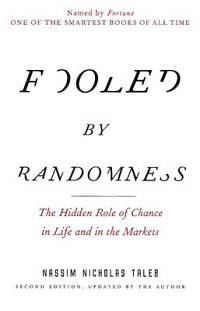
Nicholas Taleb ignited a lot of thinking within me.  He talks about the problem of induction.  He speaks of being fooled by randomness.  He talks of travel and speaking many languages.  He talks about the false history of science and technology when in fact this is s history of tinkering more in line with engineering than science. 

Thomas Nagel


I also downloaded the audio book from Thomas Nagel.  He is a guy who gets the problem of materialism and understands clearly the problem of consciousness.  Science is dead.  The Avant Garde movement in intellect right now is in Philosophy of Mind.  There is nothing new from science since the advent of Quantum Mechanics.  That was almost 80 years ago.  And, given some recent research, it is doubtful that science ever contributed anything useful to modernity outside of stealing ideas from engineers and inventors and making them their own.

If Science is Nonsense, how to we explain…?


What caused the enormous technical explosion in the last 150 years if it is not science?  Well we had scientific thinking for hundreds of years, with nothing to show for it.  What caused the great technical explosion was humans discovering a very compact form of energy and exploiting it: coal, diesel, gasoline, and heating oil.  The reason we can build large systems and get components for high technology equipment is because we have a fast transportation system based upon fossil fuels that gets things to a destination faster by an order of magnitude than previous generations 150 years ago.  It took about 6 weeks to cross the Atlantic in the times of Samuel Champlain.  Now, we can cross the same ocean in 7 hours with a standard Boeing jet, and in 3 hours with a Concorde.  Materials for the manufacturing of goods can be brought together very fast.  We ship food to remote areas whereas before we had a risk of spoilage and mostly had to rely on local supply – very local supply.  The most important set of “laws of physics” are Maxwell’s Equations.  Why were they developed?  We finally had a source of energy – coal and steam – and we wanted to transport this energy across large distances using electricity.  Engineers figured all this out, and scientists swooped in and took the credit in the history books.

A New Civilization


What causes advances?  Experimentation.  Tinkering.  It is those with the Fortitude (balls) to take risks and try new things.  These tinkerers will use everything at their disposal to mix things up and come up with something new.  

Freddy Martini

Saturday, September 13, 2014

Antifragile: Things that Become Stronger with Disorder


Antifragile


I read Nicholas Taleb’s book Antifragile over the past few weeks.  It works nicely with my philosophy of “In order to increase your strength, you must push against an opposing force.”  His voice is that of a wise grandfather who has been around the block a time or two and has something to say.

Taleb roughly predicted the economic crash of 2008, and the subsequent Second Great Depression, which is still with us today.  He made millions off of investing against the market trends at the time.  He was a professional trader.

There are certain events that happen both rarely and regularly.  The stock markets crash every seven years or so.  Natural disasters happen every decade or two.  There are three categories of things or systems in their response to this Black Swan event. 

Fragile Things


Fragile things break under a high stressor.   Think of a porcelain cup.  A large shock will shatter it.  Fragile things are destroyed under high stressors.

His symbol of the Fragile is the king feasting under the Sword of Damocles.  The sword is suspended above his head held only by a horse hair thread.  He is in a fragile situation because a horse hair thread will break under stress.

Robust Things


Robust things do not care about high stressors.  You can throw an earthquake at them, and they do not change.

His symbol for the Robust is the Phoenix.  The phoenix is repeatedly destroyed, but every time it rises from the ashes and emerges just as it was before.

Antifragile Things


Antifragile things have a peculiar aspect to them.  They become stronger under stress.  In fact, given the nature of reality, when rare catastrophic events happen, the Antifragile take advantage of the situation and become more powerful – but up to a point.

Taleb uses the symbol of the Hydra for Antifragile things.  When you cut off one head of the Hydra, more grow back in its place even stronger than before.

///

Of course, Antifragile fits my personality very well, and those of my closest friends and acquaintances.  We thrive on chaos and situations where things are changing fast.  We like to travel to strange places and test ourselves to see how strong we are.  We like wild and crazy business situations where we do not know whether or not we will survive the next month’s payroll.  We become stronger in these high stress situations.

We tend to like storms and violent weather – hurricanes especially.  We like it when supposedly strong people attempt to challenge us.

Those who like to live comfortable lives are not comfortable hanging around us.  For some reason, we disturb them greatly with our lust for life and stress.  Our minds know no boundaries or standard doctrines.  We are designed by evolution for changes and adaptation.  We are Hydra.

Freddy Martini


Friday, September 12, 2014

The Problem of Induction: Why science is nonsense.


The Problem of Induction

Why science is nonsense. 

What is the Problem of Induction and why should we care?  It is the foundation of science – whatever that is supposed to mean.  And, since science is seen by a lot of people to have some authority, we need to understand the basis of Induction.

All Dogs Bark


In Deductive Reasoning, the conclusions are contained within the premises analytically by taking the premises apart.  For example: 

  • All dogs bark (Premise)
  • Spot is a dog (Premise)
  • Therefore, Spot barks (Conclusion)

In Deductive Reasoning, as in the above example, the conclusion is a matter of teasing out the parts of the premises.  The conclusion is already inside of the premises in some form or as a piece of the premises, just waiting to be rearranged into something new – the conclusion.

Copper Conducts Electrons - maybe


What is Inductive Reasoning?  Inductive reasoning seeks to establish a new conclusion that is not contained in the premises.  For example:

·         Scientists have tested 100,000 samples of copper. (Premise)
·         All these samples of copper conduct electricity. (Premise)
·         Therefore, all copper conducts electricity.  (Conclusion)

All Swans are White – really?


This, my students, is all there is to science.  There is one problem.  It is not a solid basis for reasoning.  Let us try another example.

·         Scientists have examined 100,000 swans. (Premise)
·         All these swans are white. (Premise)
·         Therefore, all swans are white.  (Conclusion)

You may have heard of the Black Swan.  Nicholas Taleb wrote a brilliant book called the Black Swan. 

Karl Popper Says “Slow Down Cowboy”


You may have also heard of Karl Popper.  Karl Popper said that we cannot prove scientific theories, but we can only disprove them.  Why is this so?  Well, if I find one Black Swan, your above reasoning is proven as false.  If I find one example of a piece of copper that does not conduct electricity, the above scientific reasoning is false.

Shocking Conclusion: Science is Nonsense

The conclusion to this little exercise is that the foundations of our entire worldview do not exist.  Science is a complete failure as a guide to truth because none of it can be shown to be true.

This, my lads, is why the Problem of Induction is so important, and why we must struggle to come to terms with it – it destroys our modern priesthood of scientists making pronouncements to us with authority saying “this is scientific truth,” when in fact there is no scientific truth.

 Freddy Martini

Monday, September 8, 2014

Random Notes 20140908


 Anti-fragility, Nicholas Taleb, Tim Ferris, Pareto, 80/20

When doing philosophy or systems engineering, I always get to the point fastest by using the verb “is.”  What is its being.  What is its state of being.  What is its isness.  Was it not Hegel in his magisterial "Phenomenology of Spirit," who was trying to get to the this?

I was reading Nicholas Taleb’s book on Antifragility and noticed that he said something about an author or philosopher having only one idea – one central idea bring together his entire work.  I think that my entire work is centered on the simplification concept of how to get from point A to point B in any field and circumstance.  It is similar to a cause and effect diagram.  Once I can break something up into small enough pieces and get the description of each piece to get from point A to point B, then I can reassemble the system with a complete understanding of the essence of the system.  And, if I can prove that I can get from point 1 to point 2, then I can be fairly confident that I can get from point 1 to point one million.  This is similar to the computer science effect and where computers serve their purpose – iterative computations.


This is also linked to the Pareto principle.  It forces you to identify the most important features of any system or problem at hand.  The top 20% of the inputs cause 80% of the outputs in every system.  Sometimes the proportions are skewed even further – 90/10 or even 95/5 and sometimes 99/1.  Tim Ferris in his book “The 4 Hour Workweek” made this same point in reference to personal effectiveness. 

Freddy Martini

How "Friends" Functions as a Cultural Eugenics (Dysgenics!) Machine

  How "Friends" Functions as a Cultural Eugenics (Dysgenics!) Machine Introduction Friends  (1994–2004) is one of the most influen...

Popular Posts